
Calculators
Pregnancy Weeks — How Korean OB-GYNs Count Them
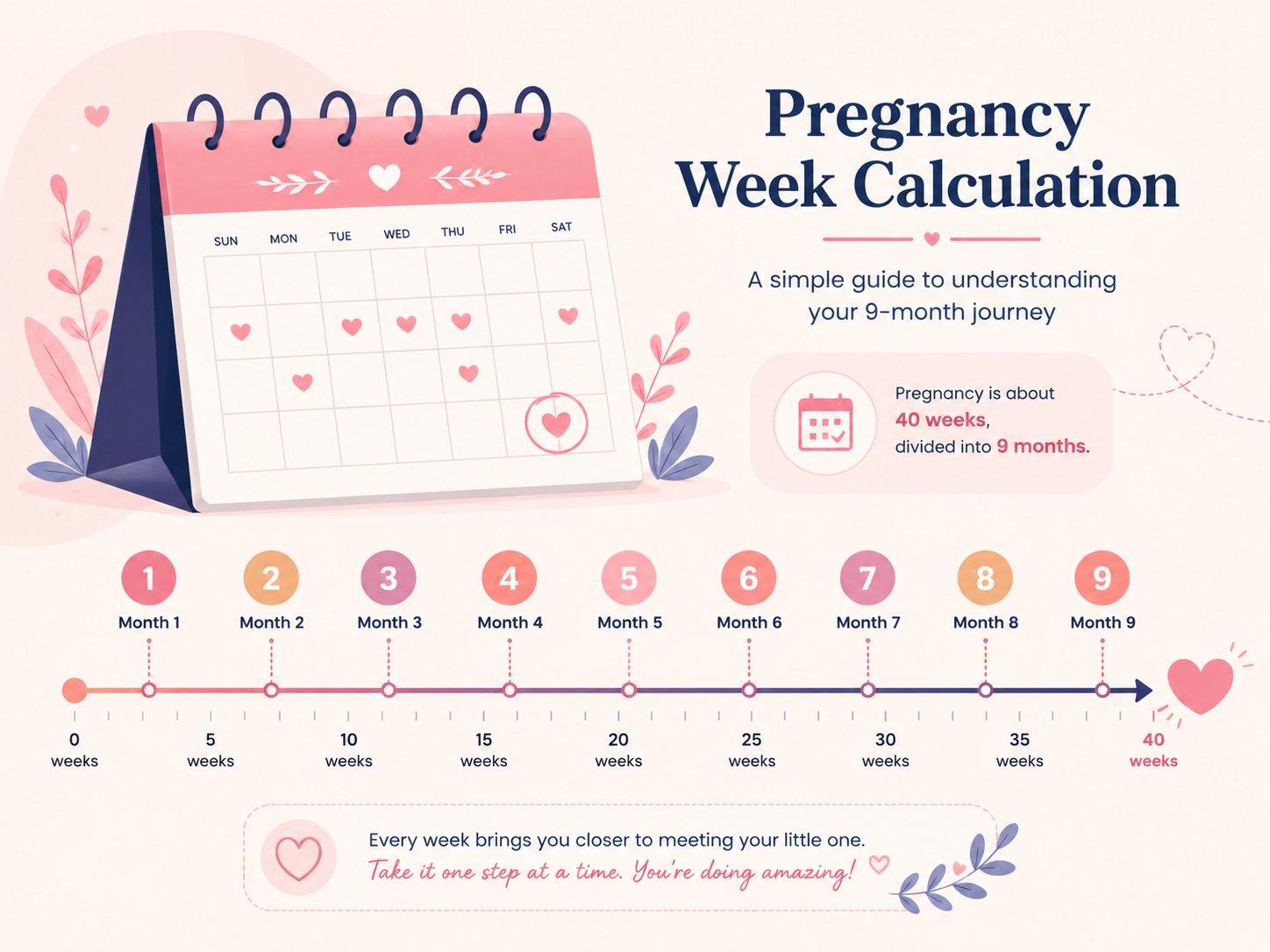
From positive test to delivery, pregnancy is tracked in weeks. The standard calculation method, the difference for IVF vs natural conception, the typical Korean prenatal exam schedule — useful both for expecting parents and for understanding what your doctor is telling you.
Due date math — Naegele's rule
Standard calculation: **First day of last menstrual period (LMP)** + 280 days (40 weeks). Formula: LMP + 1 year − 3 months + 7 days.
**Example**: LMP April 1, 2026 → due January 8, 2027. A pregnancy test typically goes positive around week 4, and an early ultrasound at week 6 can detect a heartbeat.
Assumes a 28-day cycle. Cycles of 30–35 days or irregular cycles introduce 1–2 weeks of error. An early ultrasound (weeks 8–13) confirms the actual gestational age based on fetal measurements.
Korean prenatal exam schedule (standard)
| Weeks | Exam | Notes |
|---|---|---|
| 4–6 | Pregnancy confirmation (urine/blood) | Positive test |
| 6–8 | First ultrasound, heartbeat check | Pregnancy confirmed |
| 10–13 | First-trimester screening (NT, NIPT) | Genetic screening |
| 15–20 | Second-trimester screening (quad) | Deeper screening |
| 20–24 | Detailed ultrasound | Organ development check |
| 24–28 | Gestational diabetes test | Glucose tolerance |
| 32–34 | RhD prophylaxis (if Rh negative) | Blood-type specific |
| 36–40 | Weekly checkups | Approaching delivery |
Calculate your pregnancy week
Enter LMP, conception date, or IVF transfer date to see current week, due date, and major milestones.
Pregnancy Due Date CalculatorIVF — different calculation
Because LMP-based math is unreliable in IVF cycles, the embryo transfer date is used instead. Day-5 (blastocyst) transfer + 261 days = due date. Day-3 transfer + 263 days.
Alternatively, work back from the egg retrieval date: retrieval − 14 days = a 'virtual LMP'. Then apply standard Naegele's rule.
The clinic provides an exact due date after transfer or confirmation, so manual calculation isn't needed — but understanding the principle helps when comparing dates across appointments.
Pregnancy milestones to watch for
- •**12 weeks**: End of first trimester. Miscarriage risk drops sharply. Common time to tell family/employer.
- •**16–20 weeks**: First fetal movements felt (sooner with prior pregnancies).
- •**20 weeks**: Halfway. Sex can be determined (if requested).
- •**24 weeks**: Medical viability with NICU support begins.
- •**28 weeks**: Third trimester begins. Maternal weight gain accelerates.
- •**37 weeks**: Full term. Births now considered normal delivery.
- •**40 weeks**: Due date. About 90% of babies arrive within ±2 weeks.
- •**42 weeks**: Most providers recommend induction.
Frequently asked questions
When does 'week 0' start?
First day of your last period is week 0, day 0. So by the time pregnancy is confirmed (week 4–5), you're already 4–5 weeks in. Curiously, you're not actually pregnant during weeks 0–2 — conception typically happens around day 14.
Are twin pregnancies due earlier?
The calculated due date is the same, but twins average delivery at week 37. Providers often recommend induction at 36–37 weeks for twins.
Do Korean and US OB-GYNs count weeks the same way?
Yes. Global pregnancy week-counting is standardized — 40 weeks from LMP. Korea, Japan, US, EU all use the same Naegele's rule.
Related tools
Do the thing this article describes.